

Dash Cam with Thermal Imaging: Detect Animals, Vehicles & Pedestrians
Some drivers want both continuous video recording and thermal detection in a single vehicle setup. The InsightDrive thermal system can be paired with a standard dash cam to provide both functions simultaneously — the dash cam handles visible-light recording for incident documentation, while the thermal system handles nighttime detection and real-time collision risk alerts. This collection covers the InsightDrive systems and the storage accessories that enable recording capability from the thermal feed, for drivers who want to capture thermal footage alongside standard dash cam video.
Two Ways to Add Recording to a Thermal Setup
There are two practical approaches to combining thermal detection with video recording in the same vehicle:
- Parallel setup — InsightDrive + separate dash cam: The most straightforward approach. A standard dash cam records visible-light video continuously via its own power connection and storage card. The InsightDrive operates independently for thermal detection and alerts. Both systems run simultaneously without interfering with each other. This gives you a full visible-light record from the dash cam and full thermal detection from the InsightDrive.
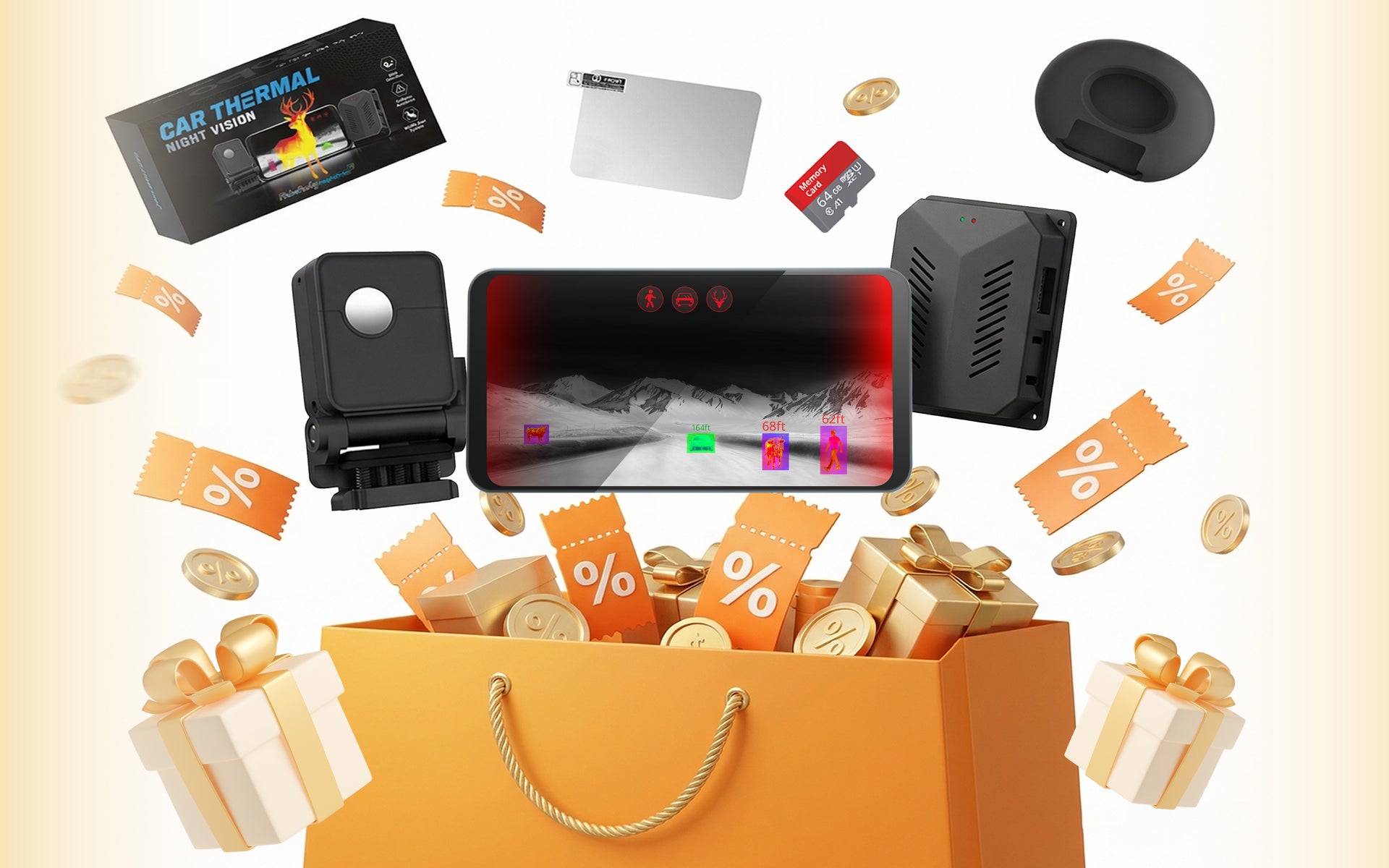
- Thermal recording via storage accessory: The InsightDrive thermal feed can be recorded using compatible storage accessories, capturing the thermal image output directly. This produces a thermal video record rather than a visible-light record. Thermal footage shows heat signatures rather than a photographic image of the scene — it is useful for reviewing detection events but does not capture license plates or fine visual detail.
What Thermal Recording Captures — and What It Does Not
Understanding what thermal footage contains helps set accurate expectations before configuring a recording setup:
- What thermal recording captures: Heat signatures from animals, pedestrians, and vehicles; the timing and position of detected objects; the sequence of events leading up to a detected collision risk
- What thermal recording does not capture: License plates, vehicle colors, road signs, facial features, or any visible-light detail. Thermal footage is not suitable as a primary incident documentation record for insurance or legal purposes.
For incident documentation purposes, a standard visible-light dash cam remains the appropriate tool. Thermal recording is a supplement for reviewing detection events, not a replacement for visible-light footage.
Configuring a Dual-System Setup
Running both a dash cam and the InsightDrive in the same vehicle requires:
- Two separate power connections to the vehicle’s 12V system — one for each device, each with appropriate fuse protection
- Two display outputs or a multi-input display — the dash cam typically displays on its own built-in screen or a dedicated monitor; the InsightDrive connects to a separate display or a screen with a compatible input
- Cable management to route both systems’ cables cleanly without interference
Frequently Asked Questions
Can the InsightDrive and a dash cam share the same display?
If your display has multiple video inputs (for example, both HDMI and RCA), you can switch between the dash cam feed and the thermal feed on the same screen. Simultaneous display of both feeds on a single screen requires a picture-in-picture capable display or a video mixer, which is not a standard configuration. Most dual-system setups use separate displays for each device.
Does thermal recording require a separate storage device?
Yes. The InsightDrive outputs a video signal that requires a compatible recording device or storage accessory to capture. Check the available accessories in this collection for compatible storage options. The dash cam’s own storage card records only the dash cam’s visible-light feed, not the thermal feed.
Is thermal footage admissible as evidence in an insurance claim?
Thermal footage shows heat signatures rather than a photographic record of the scene. Its admissibility and usefulness as evidence varies by jurisdiction and insurer. For insurance documentation purposes, visible-light dash cam footage is the standard and more widely accepted format. Consult your insurer about their requirements before relying on thermal footage for claims purposes.
How much storage does thermal recording require?
Storage requirements depend on the recording resolution and format of the storage accessory used. Contact Robofinity for specific storage accessory specifications and compatibility before configuring a thermal recording setup.
Browse the systems and recording accessories in this collection. Contact Robofinity for configuration questions before ordering.
Filters
1 product