


Thermal Imaging Collision Avoidance System | Prevent Accidents Day & Night
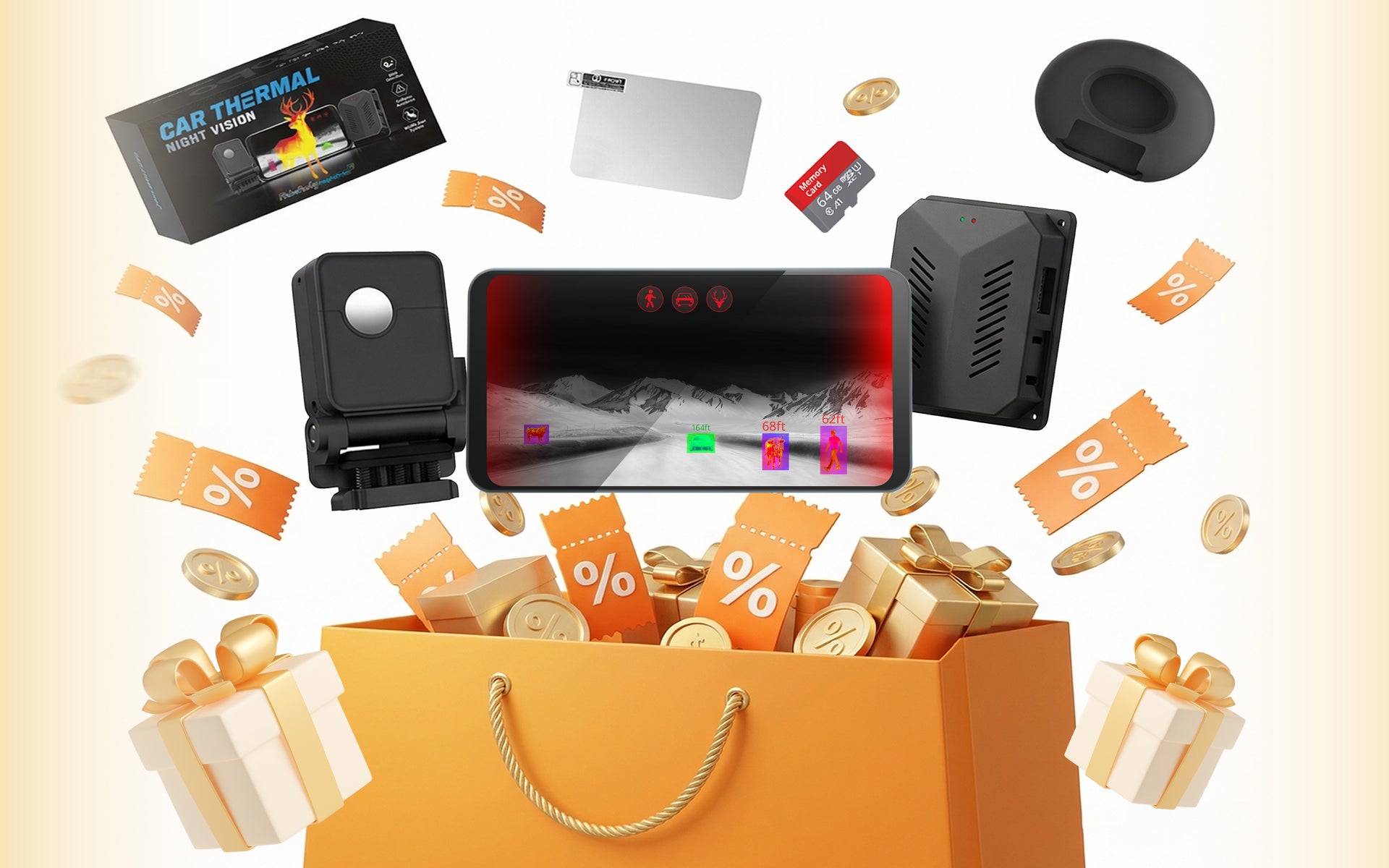
A thermal imaging collision avoidance system combines passive infrared detection with AI trajectory analysis to give drivers earlier warning of animals, pedestrians, and vehicles on a collision course. The Robofinity InsightDrive detects heat signatures at up to 200m (656ft), classifies the object type, and issues a real-time alert when the detected object is calculated to be on a trajectory toward the vehicle. This collection covers the InsightDrive systems for drivers who want active collision risk alerts rather than a passive display-only thermal feed.
How the Collision Avoidance Alert Works
The InsightDrive alert function operates in three stages:
- Detection: The thermal sensor detects a heat signature within its forward field of view at up to 200m. The object appears in the thermal display immediately upon detection.
- Classification: The AI layer analyzes the thermal image to classify the detected object as an animal, pedestrian, or vehicle based on its heat signature shape, size, and movement pattern.
- Trajectory analysis: The system calculates whether the detected object is on a trajectory toward the vehicle. If the analysis determines a collision risk, the system issues a real-time alert. Objects detected at the road edge that are not moving toward the vehicle may appear in the display without triggering an alert.
The Time Advantage: Why Earlier Detection Changes Outcomes
The practical value of a collision avoidance alert is measured in the additional time it provides between detection and the point where the hazard reaches the vehicle. At highway speed, the difference between detecting a hazard at headlight range versus at 200m is significant:
| Speed | Time at headlight range (70m) | Time at 200m detection | Additional time |
|---|---|---|---|
| 40 mph (64 km/h) | ~3.9 sec | ~11.2 sec | ~7.3 sec |
| 55 mph (89 km/h) | ~2.8 sec | ~8.1 sec | ~5.3 sec |
| 70 mph (113 km/h) | ~2.2 sec | ~6.4 sec | ~4.2 sec |
At 70 mph, an additional 4+ seconds of warning time is the difference between a controlled speed reduction before reaching the hazard and an emergency braking situation at close range. For vehicles with longer stopping distances — trucks, RVs, or vehicles towing trailers — this additional time is proportionally more critical.
What the System Does Not Do
The InsightDrive is a driver assistance system, not an autonomous intervention system. It is important to understand what the alert function does and does not do:
- The system does not apply brakes automatically
- The system does not steer the vehicle
- The system does not override driver inputs
- The system does provide earlier information so the driver can make a controlled response
The driver remains fully responsible for all braking and steering decisions. The alert provides earlier awareness; the outcome depends on the driver’s response.
Integrating the Alert Into Your Driving
Getting the most from the collision avoidance alert requires understanding how to respond effectively:
- When an alert is issued, begin reducing speed immediately — do not wait to visually confirm the hazard in your headlights before braking
- Use the thermal display to monitor the detected object’s position and movement as you approach
- If the object moves off the road before you reach it, the alert will clear — resume speed gradually after confirming the road ahead is clear
- On rural roads at night, treat the thermal display as a supplementary information source alongside your headlights, not as a replacement for road observation
Frequently Asked Questions
Does the system issue false alerts for roadside objects like mailboxes or signs?
The AI classification system is designed to detect warm-bodied objects — animals, pedestrians, and vehicles with running engines. Static objects at ambient temperature do not emit distinguishable heat signatures and are not detected by the thermal sensor. Roadside infrastructure such as mailboxes, signs, and guardrails does not trigger alerts under normal operating conditions.
How does the system handle a hazard that appears and then moves off the road?
If a detected animal or pedestrian moves away from the vehicle’s path after an alert is issued, the trajectory analysis updates in real time. If the object is no longer on a collision course, the alert clears. The object may remain visible in the thermal display if it is still within the camera’s field of view.
Does the alert work at low speeds as well as highway speeds?
Yes. The alert function operates at any speed. At lower speeds, the 200m detection range provides proportionally more reaction time than at highway speed. The system is relevant at any speed where earlier detection of a hazard would allow a more controlled response.
Browse the collision avoidance systems in this collection. Contact Robofinity for vehicle compatibility questions before ordering.
Filters
1 product

