
Thermal Night Vision Camera For Cars | Detect Animals, People & Vehicles
Winter driving combines shorter daylight hours, reduced visibility from snow and ice, and peak wildlife activity during the early darkness of autumn and winter evenings. For drivers on rural roads in northern climates, the months from October through March represent both the highest wildlife collision risk period and the most challenging visibility conditions of the year. A thermal night vision camera performs at its best in cold conditions — the greater the temperature differential between a warm-bodied animal and the cold background environment, the stronger the thermal signal and the clearer the detection. This collection covers the InsightDrive thermal cameras for drivers in cold-climate regions who face winter driving conditions regularly.
Why Cold Temperatures Improve Thermal Detection
Thermal imaging detects the difference in infrared radiation between a warm object and its background. In summer, a deer at 38°C body temperature against a road surface at 25°C produces a temperature differential of 13°C. In winter, the same deer against a road surface at −5°C produces a differential of 43°C — more than three times greater. This larger differential produces a higher-contrast thermal image that is easier to resolve at distance. Cold winter nights are the conditions where thermal imaging performs most effectively, which aligns directly with the season when wildlife collision risk is highest in northern regions.
Winter Driving Conditions and Thermal Detection
Snow-Covered Roads
Snow on the road surface creates a bright, cold background that makes warm-bodied animals stand out with high contrast in the thermal image. A deer standing on a snow-covered road is among the easiest detection scenarios for thermal imaging — the white thermal image of the animal against the cold snow background is clearly distinguishable at maximum detection range.
Light Snowfall
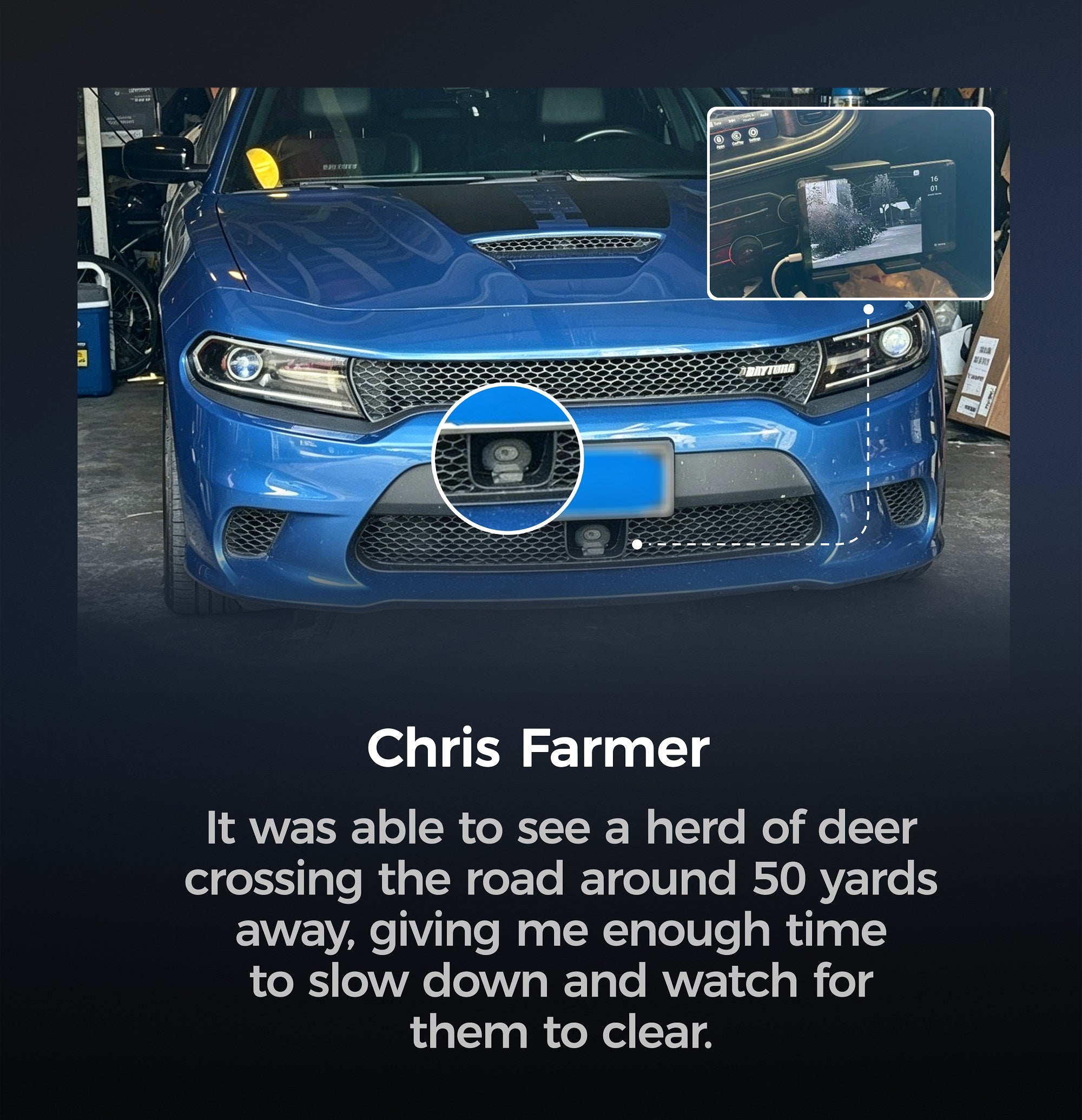
Light to moderate snowfall does not significantly affect thermal detection performance. Snowflakes do not emit significant infrared radiation and do not obscure the thermal image in the way they reduce visible-light camera performance. In conditions where headlights are significantly degraded by falling snow, thermal detection maintains better performance.
Freezing Fog
Freezing fog reduces visible-light camera performance significantly. Thermal imaging maintains better performance in freezing fog than visible-light cameras, though very dense freezing fog can attenuate infrared radiation and reduce effective detection range.
Black Ice Conditions
Black ice itself is not detectable by thermal imaging — ice at road temperature does not produce a distinguishable thermal signature. However, in black ice conditions where stopping distances are dramatically extended, earlier detection of animals and other hazards ahead provides more time to begin controlled deceleration before reaching the hazard. Earlier warning is proportionally more valuable when stopping distances are longest.
Winter Installation Considerations
- Operating temperature range: Verify the camera’s rated operating temperature range covers the minimum temperatures in your region before installation. Check the product specifications for the rated minimum operating temperature.
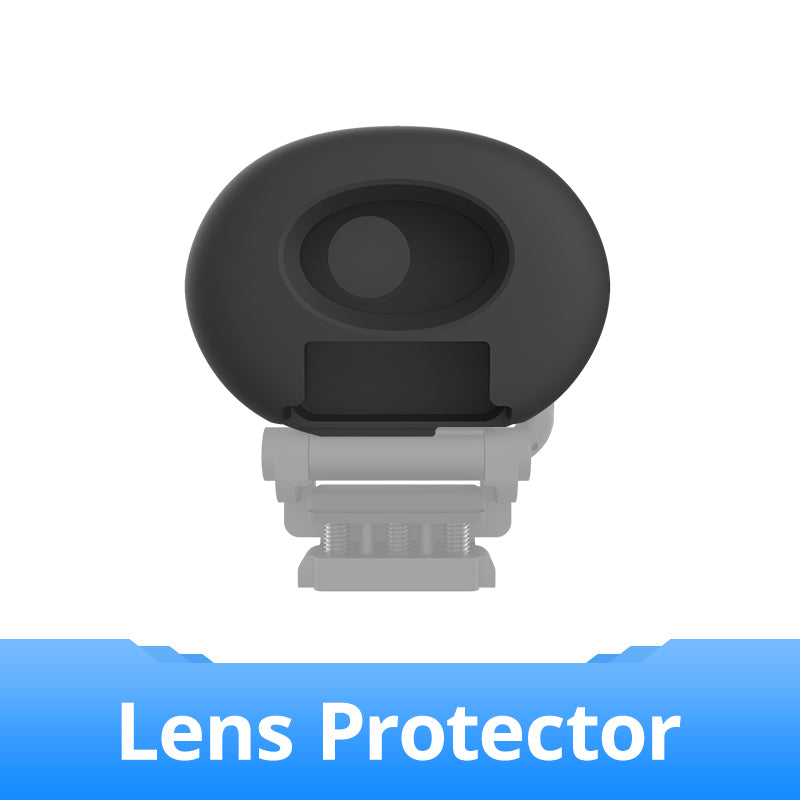
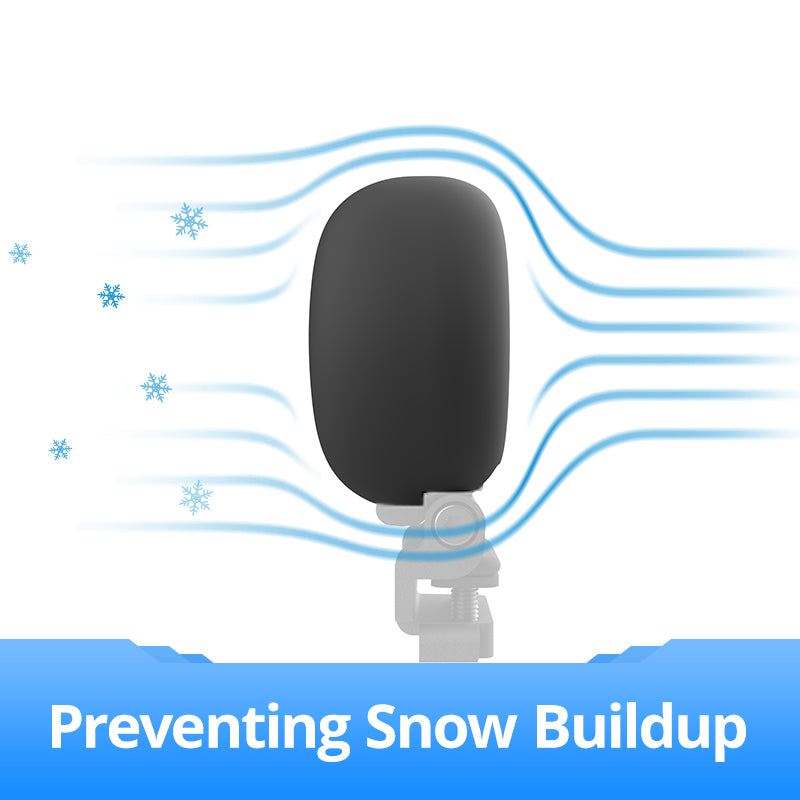
- Snow and ice accumulation on the lens: In heavy snowfall, snow may accumulate on the camera lens and reduce image clarity. The lens protector accessory provides some protection. In severe conditions, periodic lens clearing may be needed.
- Cable flexibility in cold: Standard automotive cables remain flexible at typical winter temperatures. In extreme cold (below −30°C), check that cable materials are rated for the temperatures in your region.
- Condensation: Temperature transitions from cold outdoor conditions to a warm garage can cause condensation. The camera’s IP rating provides protection against moisture ingress under normal operating conditions.
Frequently Asked Questions
Does the system work in heavy snowfall?
Light to moderate snowfall does not significantly affect thermal detection. In very heavy snowfall with dense precipitation close to the camera, image clarity may be temporarily reduced. Speed management appropriate to conditions remains the primary safety measure in severe winter weather.
Is the system useful during the autumn deer rut in cold northern climates?
Yes. The October–December period combines peak deer rutting activity with the onset of cold temperatures that improve thermal contrast. This is the period when the InsightDrive provides the most significant detection advantage for rural drivers in northern North America and northern Europe.
Does the system need any adjustment for winter use compared to summer?
No adjustment is required. The system operates automatically and adapts to the thermal conditions present. Cold temperatures improve detection performance without requiring any user adjustment to settings or sensitivity.
Browse the systems in this collection. Contact Robofinity for cold-climate compatibility questions before ordering.
Filters
7 products