Car Thermal Camera for Night Driving

Best Car Thermal Camera for Night Driving - Boost Safety & Visibility

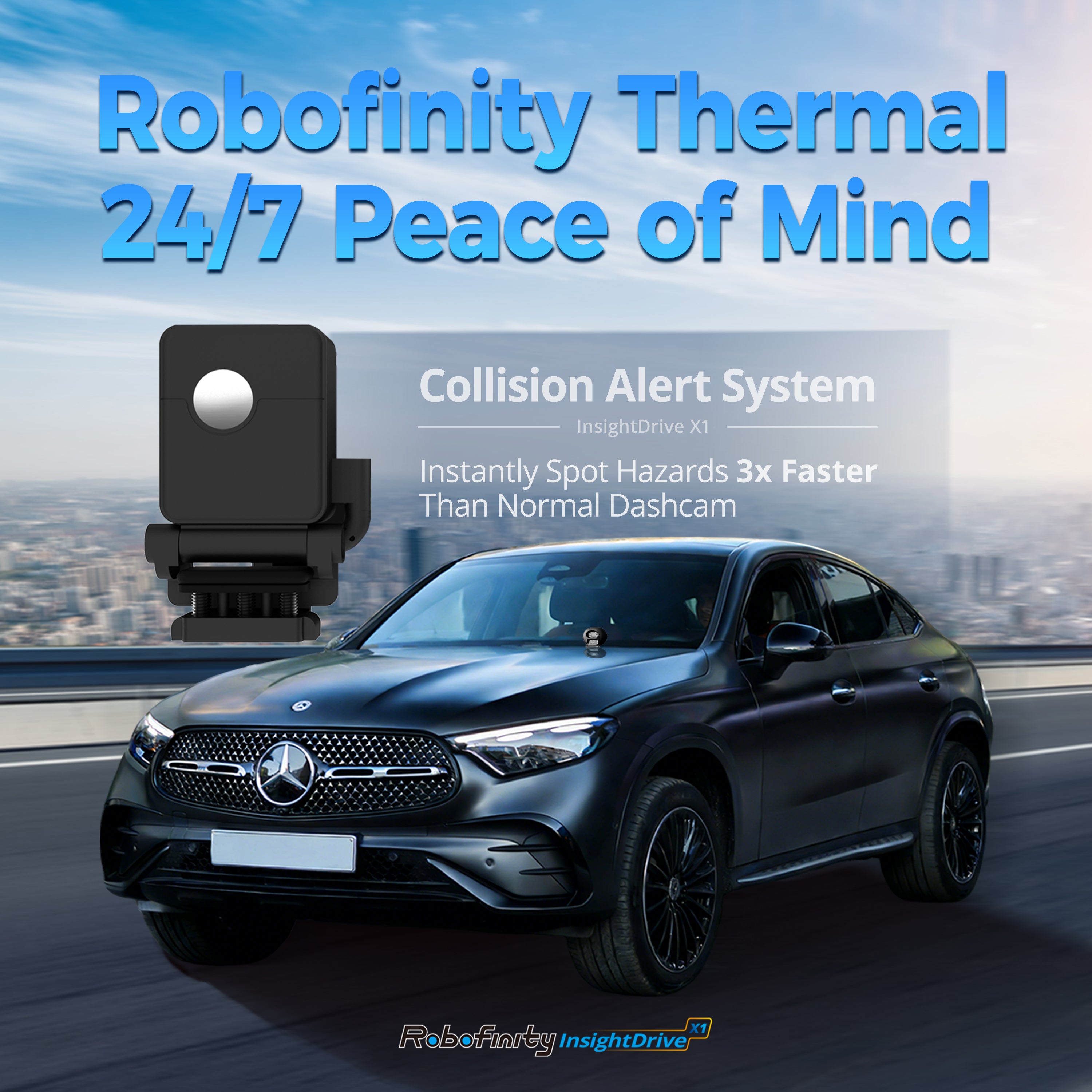
Night driving on rural highways combines the highest speeds with the lowest visibility conditions. At 70 mph on an unlit two-lane highway, a driver has approximately 2.2 seconds to react to a hazard that appears at the edge of low-beam headlight range before reaching it. For a large animal like a deer or elk, that reaction window is often insufficient for a controlled stop. A thermal camera that detects the same hazard at 200m provides approximately 6.4 seconds of warning at the same speed — enough time to reduce speed significantly before reaching the animal. This collection covers the InsightDrive thermal cameras for drivers who regularly travel rural highways at night and want to understand the specific safety case for thermal detection at highway speeds.

The Physics of Highway Night Driving

The safety case for thermal detection at highway speed is grounded in the relationship between speed, stopping distance, and detection range:

Speed Stopping distance (dry road) Headlight detection range Thermal detection range Time advantage
55 mph ~193 ft ~230 ft (~2.9 sec) 656 ft (~8.1 sec) ~5.2 sec
65 mph ~262 ft ~230 ft (~2.4 sec) 656 ft (~6.9 sec) ~4.5 sec
70 mph ~300 ft ~230 ft (~2.2 sec) 656 ft (~6.4 sec) ~4.2 sec
75 mph ~345 ft ~230 ft (~2.1 sec) 656 ft (~6.0 sec) ~3.9 sec

At 65 mph, stopping distance already exceeds standard low-beam headlight range. This means a driver relying solely on headlights at highway speed cannot stop in time for a hazard that appears at the edge of headlight range — the vehicle is already within the stopping distance envelope when the hazard becomes visible. Thermal detection at 200m moves the detection point outside the stopping distance envelope at all common highway speeds.

Two-Lane Rural Highways: The Highest-Risk Scenario

Two-lane rural highways combine several risk factors simultaneously:

  • No median barrier — animals can cross from either side
  • No street lighting — headlights are the only illumination
  • Higher speed limits than urban roads — 55–65 mph typical
  • Adjacent wildlife habitat — forest, agricultural land, or grassland on both sides
  • Oncoming traffic — headlight glare from approaching vehicles temporarily reduces forward visibility

The InsightDrive is not affected by oncoming headlight glare and maintains consistent 200m detection performance regardless of traffic conditions on the opposite lane.

Night Highway Driving Fatigue and Detection

Fatigue increases reaction time. A driver who is mildly fatigued after several hours of highway driving may have a reaction time of 1.5–2.0 seconds rather than the 0.75–1.0 seconds of an alert driver. At 70 mph, an additional 0.75 seconds of reaction time adds approximately 77 feet to the effective stopping distance. Earlier detection from thermal imaging partially compensates for fatigue-related reaction time increases by providing more total time between detection and the hazard reaching the vehicle.

Frequently Asked Questions

Does the system work at highway speeds above 70 mph?

Yes. The system operates at any vehicle speed. Detection range remains up to 200m regardless of vehicle speed. At higher speeds, the time advantage from earlier detection is proportionally shorter, but the detection range advantage over headlights remains the same.

Is the system useful on divided highways as well as two-lane roads?

Yes. Divided highways with median barriers reduce the risk of animals crossing from the opposite side but do not eliminate wildlife on the road — animals can still access the highway from the shoulder side. On divided highways without wildlife fencing, thermal detection remains relevant for the same reasons as on two-lane roads.

Does the system help with the glare from oncoming headlights on two-lane roads?

Yes. Thermal imaging detects heat rather than visible light and is not affected by oncoming headlight glare. During the period when an oncoming vehicle’s headlights temporarily reduce a driver’s forward visibility, the thermal display continues to show the road ahead clearly, maintaining detection capability through the glare exposure.

Browse the systems in this collection. Contact Robofinity for vehicle compatibility questions before ordering.

Filtros

Filtros
Ordenar por:

1 producto

Oferta
Car Thermal Night Vision | Animal & Pedestrian Collision Alert System | Robofinity