
Car Deer Detection System - Vehicle Animal Alert & Night Vision Sensors
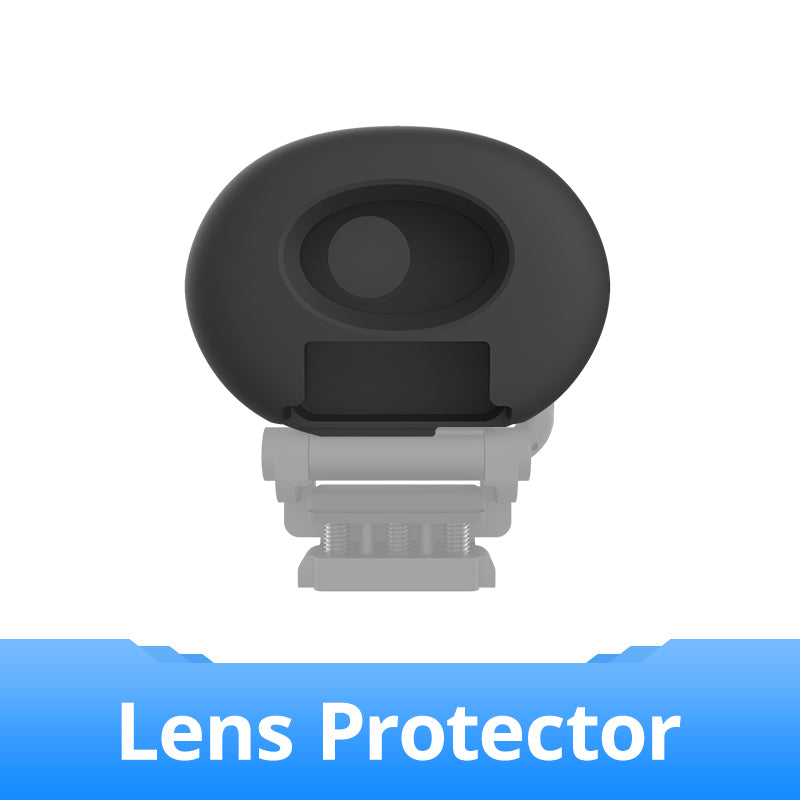
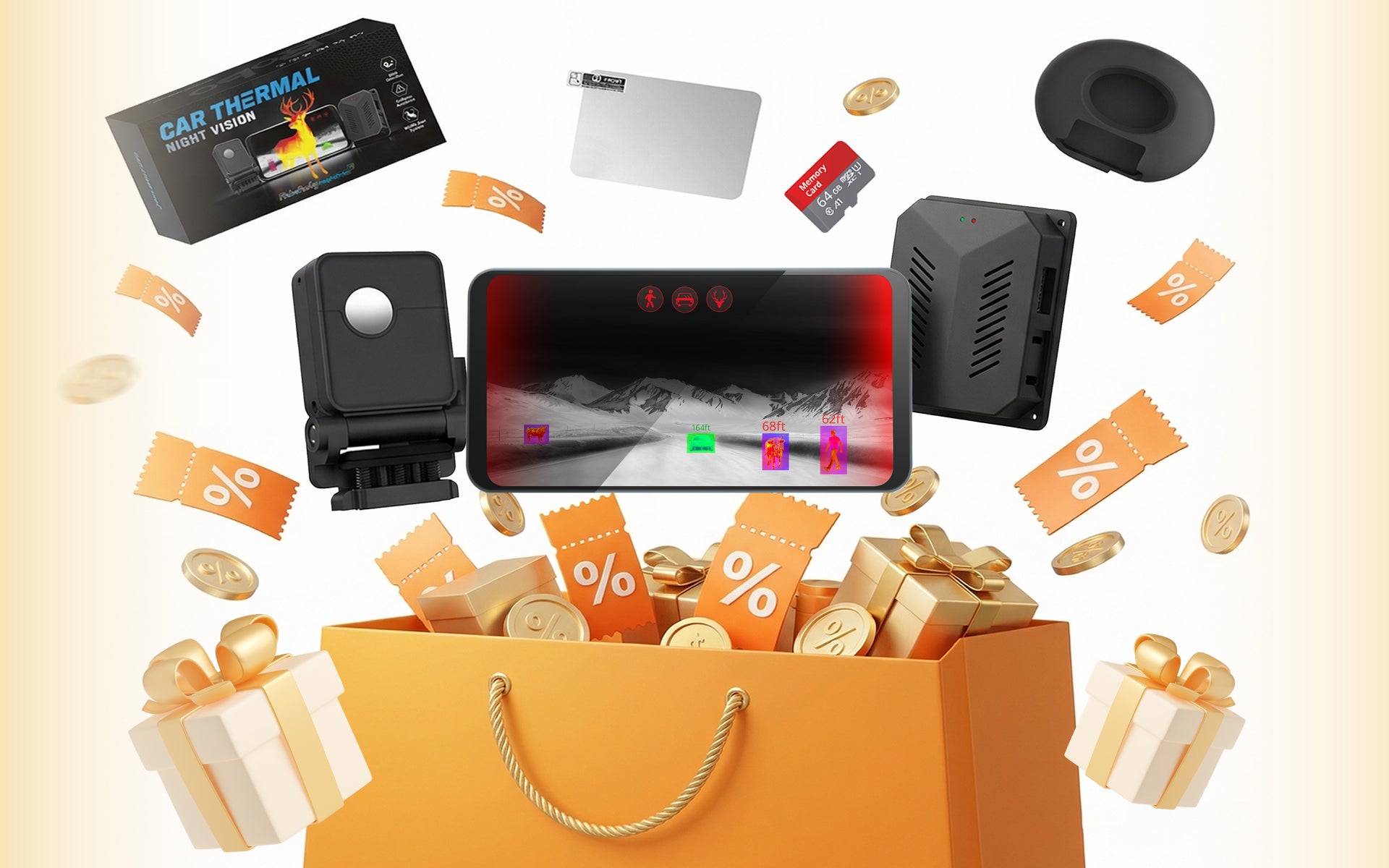
A car deer detection system uses thermal imaging to identify the heat signature of deer and other large animals on or near the road at distances up to 200m (656ft) — well before they enter standard headlight range. The Robofinity InsightDrive is an aftermarket thermal detection system compatible with most 12V passenger vehicles. It classifies detected animals using AI and issues a real-time collision risk alert when a deer or other large animal is on a trajectory toward the vehicle. This collection covers the InsightDrive systems and accessories for drivers who regularly travel routes with documented deer collision risk.
When Deer Collision Risk Is Highest
Deer-vehicle collisions are not evenly distributed across the calendar or the clock. Understanding the peak risk periods helps drivers prioritize when the detection system is most important to have active:
- October through December: The peak collision period in North America, driven by deer rutting season. Bucks are actively moving across large territories, crossing roads at unpredictable times and locations.
- May and June: A secondary peak as does disperse their yearlings from the previous season, increasing deer movement across roads.
- Dawn and dusk: Deer are crepuscular — most active at dawn and dusk. These are the highest-risk times of day year-round, coinciding with low ambient light conditions where headlights are least effective.
- Night: Deer remain active through the night, particularly in areas with low human activity. Rural highway driving between 8 p.m. and 6 a.m. carries elevated risk throughout the year.
How the InsightDrive Detects Deer
Deer body temperature is typically 38–39°C. Against a road surface or field background at 5–15°C on a cool night, this temperature differential produces a high-contrast thermal image that the sensor resolves clearly at up to 200m. The AI classification layer identifies the object as an animal and calculates whether it is moving toward the vehicle’s path. When a collision trajectory is detected, the system issues an alert. The driver receives this warning with significantly more time to respond than headlights alone would provide — at 60 mph, 200m represents approximately seven seconds of travel time versus roughly two seconds at headlight range.
Vehicle Types and Deer Risk
Deer collision risk is not uniform across vehicle types. Vehicles most commonly involved in deer collisions share common characteristics:
- Passenger cars and sedans: Lower hood height means a deer collision often results in the animal going over the hood and into the windshield — a higher-consequence impact than on taller vehicles
- SUVs and crossovers: Higher hood height reduces windshield strike risk but does not reduce the collision itself; frequently driven on rural routes where deer risk is highest
- Pickup trucks: Similar to SUVs; commonly used on rural roads and during hunting season when deer movement is highest
- Motorcycles: The InsightDrive is designed for four-wheeled vehicles with a 12V electrical system and a display; it is not designed for motorcycle installation
Frequently Asked Questions
Does the system detect deer in fields adjacent to the road, or only on the road surface?
The system detects heat signatures within its forward field of view, which includes the road surface and the area immediately adjacent to the road. A deer standing in a field near the road edge will appear in the thermal image if it is within detection range and within the camera’s field of view. The collision risk alert is issued when AI analysis determines the animal is on a trajectory toward the vehicle — a stationary deer in a field that is not moving toward the road may appear in the display without triggering an alert.
Can the system detect multiple deer at once?
Yes. The thermal image shows all heat sources within the camera’s field of view simultaneously. If a group of deer is crossing the road, all animals within detection range will appear in the thermal image. The AI system processes the image in real time and can issue alerts for multiple detected objects.
Is the system useful during the day as well as at night?
The system functions at any time of day. Its advantage over standard cameras is most significant at night and in low-light conditions. During daylight, the temperature differential between deer and the background environment is smaller, which may reduce detection range compared to nighttime conditions. The system is primarily designed for nighttime and low-light use cases.
Does the system work in areas with high deer populations year-round?
Yes. The system is relevant wherever deer are present on or near roads at night, regardless of season. In areas with year-round high deer density — such as agricultural regions, forest edges, and suburban-rural interfaces — the system provides consistent benefit throughout the year, not only during peak collision months.
Browse the detection systems in this collection. Contact Robofinity for vehicle compatibility questions before ordering.
Suodattimet
4 tuotetta