
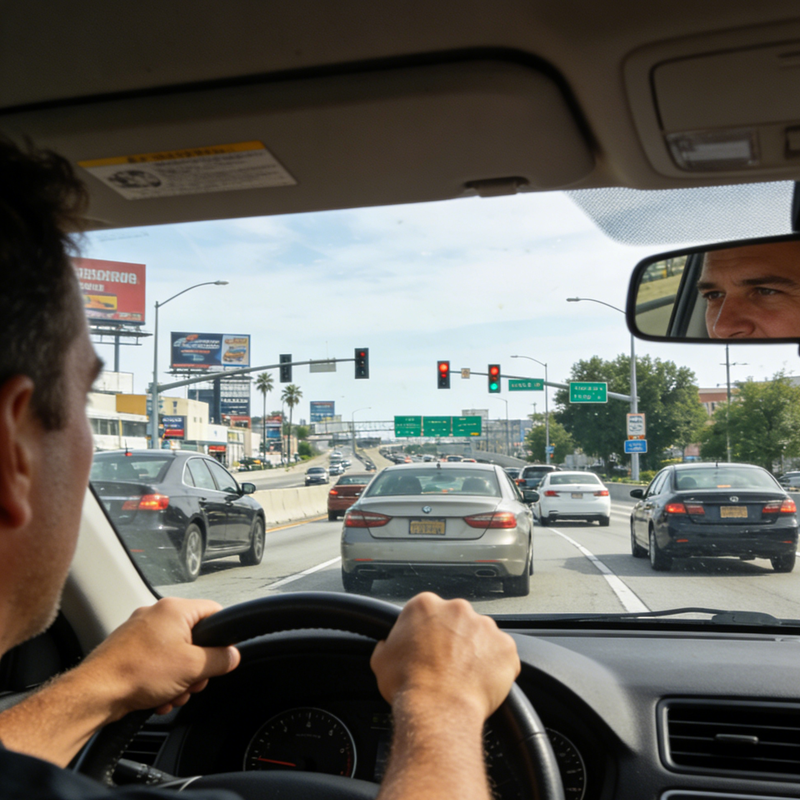
7 Tips to Avoid Traffic Accidents on Your Commute is something every driver needs to think about.
Whether you drive five miles or fifty miles to work every day, the daily commute is one of the most dangerous parts of your routine. Statistics show that most crashes don't happen on long road trips. They happen close to home. They happen during rush hour when everyone is in a hurry. They happen when you're tired, distracted, or running late. The good news is you can learn how to avoid traffic accidents. It doesn't take a lot of effort. It just takes awareness and building good habits. This article will give you seven simple, practical tips that actually work. These tips come from real driving experience, safety research, and advice from traffic safety experts. Read them carefully. Remember them. And use them every single time you get behind the wheel. Your safety and the safety of your loved ones depend on it.
Why Your Commute Deserves More Attention
Let's be honest. Commuting can be boring. You drive the same roads every day. You see the same exits, the same buildings, the same traffic patterns. It becomes a routine. And when things become routine, you stop paying close attention. Your mind wanders. You think about work, about dinner, about your to-do list. That's when accidents happen.
Speeding plays a role in about one-quarter of all traffic deaths each year, according to the National Highway Traffic Safety Administration. Distracted driving is also a huge problem. People look at their phones, eat breakfast behind the wheel, or zone out. In 2022, distracted driving killed over 3,300 people in the United States alone.
If you want to avoid traffic accidents, you have to break out of that routine mindset. Every time you drive, it's a new trip. Conditions change. Other drivers change. You need to stay alert. The seven tips below will help you do exactly that.
Tip 1: Give Yourself Plenty of Time Every Morning
This is the simplest tip, but it might be the most important. When you're running late, you make bad decisions. You speed. You weave in and out of traffic. You run yellow lights that are about to turn red. You take risks you would never take if you had extra time.
The solution is easy. Leave earlier. Build extra minutes into your schedule. If your commute usually takes thirty minutes, give yourself forty-five. Use that extra time to drive calmly and stick to the speed limit. If you hit traffic, it's no big deal because you have a buffer. You won't feel stressed, and you won't feel tempted to drive aggressively.
Think about it this way: Speeding because you're late rarely saves more than a few minutes. But it greatly increases your chance of a crash. According to the Insurance Institute for Highway Safety, speeding is a factor in nearly 30% of all fatal crashes. If you truly want to avoid traffic accidents, start by leaving early. It's that simple.
Tip 2: Keep Your Eyes Moving and Scan the Road
Good drivers don't just stare at the car in front of them. They scan the whole road constantly. They look ahead. They check their mirrors. They watch the sides of the road for pedestrians, animals, or cars pulling out.
Try to look at least ten to fifteen seconds ahead. That means looking past the car right in front of you. Look at the cars further up. What are their brake lights doing? Is traffic slowing down? Is there a car trying to merge? Seeing these things early gives you more time to react.
Also, check your mirrors every five to eight seconds. You need to know what's happening behind you and beside you. Is someone coming up fast? Is a car in your blind spot? You can't react to threats you don't see.
When you approach intersections, be extra careful. Even if you have a green light, look both ways before entering. Someone might run a red light. This is sometimes called a "stale green light" situation. You can't control what other drivers do. You can only control how ready you are to react.
This constant scanning helps you avoid traffic accidents because you see problems early. Early warning means more time to brake or steer away.
Tip 3: Maintain a Safe Following Distance at All Times
Tailgating is dangerous and unnecessary. If you follow too close, you have no time to stop if the car ahead brakes suddenly. Rear-end collisions are one of the most common types of crashes. They are also one of the easiest to prevent.
Use the three-second rule. Find a fixed object on the side of the road—a sign, a pole, a tree. When the car ahead of you passes that object, start counting. "One-one-thousand, two-one-thousand, three-one-thousand." If you reach the same object before you finish counting, you're following too closely. Back off.
In bad weather, increase your following distance to four or five seconds. Rain, snow, and ice make roads slippery. Your car needs more distance to stop. Giving yourself that space is the simplest way to avoid traffic accidents caused by sudden stops.
Also, be careful around certain vehicles. Big trucks block your view of the road ahead. Taxis might stop suddenly to pick up passengers. Cars with temporary plates might have inexperienced drivers. Give them extra room. When you maintain a safe distance, you create a cushion of safety around your vehicle.

Tip 4: Put Your Phone Away and Minimize Distractions
This should go without saying, but too many people still text and drive. It's deadly. When you look at your phone, you take your eyes off the road. At fifty-five miles per hour, looking away for just five seconds means you travel the length of a football field completely blind.
Even hands-free calls are distracting. Your brain is focused on the conversation, not on driving. Studies show that talking on a hands-free phone still increases your risk of a crash. The safest choice is to ignore your phone entirely while the car is moving.
Put it in the glove box. Put it in the back seat. Use your phone's "Do Not Disturb While Driving" mode if it has one. If you need to use GPS, set your destination before you start driving. Pull over if you absolutely must take a call or send a text.
Other things distract you too. Eating, drinking, adjusting the radio, grooming—all these take your attention away from the road. Do them before you leave or after you arrive, not while driving.
Distracted driving makes it impossible to avoid traffic accidents. You cannot react to something you do not see. Keep your eyes on the road and your mind on driving.
Tip 5: Adjust Your Driving for Weather and Light Conditions
The speed limit is meant for ideal conditions. When weather is bad, you need to slow down. Rain, fog, snow, ice, and even strong sun glare all make driving more dangerous.
In rain, roads become slick. Your tires have less grip. If you hit a puddle, you might hydroplane. That means your tires lose contact with the road. You cannot steer or brake. The only way to prevent it is to slow down and avoid sudden movements.
In fog, visibility drops dramatically. You cannot see far ahead. Animals or stopped cars might appear suddenly. Use your low beams or fog lights. High beams actually make it worse because the light reflects back at you, creating a white wall.
In snow and ice, drive very slowly. Accelerate gently, brake gently, and turn gently. Jerky movements can make you lose control. If the roads are really bad, consider staying home or using public transit if possible.
Sun glare is another hazard during morning and evening commutes. Glare can blind you temporarily. Keep your windshield clean, both inside and out. Wear polarized sunglasses. Use your sun visor. If you cannot see, slow down until you can.
When you adjust your driving to match conditions, you greatly improve your ability to avoid traffic accidents.
Tip 6: Watch Out for Other Drivers and Drive Defensively
You might be a perfect driver. But other people make mistakes. They get distracted. They get angry. They drive drunk. You have to drive for them too.
Watch for aggressive drivers. If someone is tailgating you or weaving through traffic, let them pass. Move over to the right lane. Do not engage. Do not make eye contact. Do not honk or make gestures. Your goal is not to teach them a lesson. Your goal is to get home safely.
Watch for drivers who seem unsure. Someone slowing down way before an exit. Someone drifting in their lane. Someone braking for no reason. Stay away from them. Give them plenty of space.
Watch for "phantom" risks. A car stopping in the lane ahead might mean something is in the road. A car pulling out of a parking spot might not see you. A child playing near the street might run out suddenly. Always be ready for the unexpected.
Defensive driving means expecting the unexpected. When you anticipate what others might do, you have time to react. That reaction time helps you avoid traffic accidents.
Tip 7: Keep Your Vehicle Well-Maintained
Your car needs to be reliable. If something fails while you're driving, you could crash. Regular maintenance is a key part of safety.
Check your tires regularly. Bald tires are dangerous, especially in rain. Use the penny test. Insert a penny into the tread with Lincoln's head down. If you can see the top of his head, your tires are too worn. Replace them.
Check your lights often. Make sure headlights, brake lights, and turn signals all work. Other drivers need to see your signals and your presence on the road.
Check your wiper blades twice a year. If they leave streaks, replace them. You need clear vision in rain and snow.
Pay attention to warning lights on your dashboard. They are there for a reason. If a light comes on, get it checked as soon as possible.
Keep your windows and mirrors clean. Dirt and grime reduce visibility, especially at night or when the sun is low.
A well-maintained car is a predictable car. It responds the way you expect. That predictability helps you avoid traffic accidents caused by mechanical problems.

How Technology Can Give You an Extra Safety Edge
We've talked about driving habits. Those are the foundation of safety. But technology can help too. Modern cars often come with features like blind spot monitoring, forward collision warning, and automatic emergency braking. These are great. They add an extra layer of protection.
But what about driving at night? Or in fog? Or in heavy rain? Regular headlights only reach so far—maybe eighty to one hundred twenty meters. And they don't work well in bad weather. Light reflects off fog and rain, making it harder to see.
This is where advanced technology comes in. Thermal imaging cameras don't use light. They use heat. They detect the infrared energy given off by living things. People, animals, and even other vehicles all give off heat. A thermal camera can see them in total darkness. It can see through fog. It can see through rain and snow.
Imagine driving home on a foggy night. You can't see far ahead with your headlights. But a thermal camera shows a deer standing on the road two hundred meters ahead. You get an alert. You slow down. You avoid a crash that could have totaled your car or caused serious injury.
This technology is not science fiction. It is available now. And it's surprisingly easy to install.
Experience the Future of Driving Safety with Robofinity
Speaking of technology that helps you avoid traffic accidents, let me tell you about a product that is changing the game for night driving and bad weather.
Robofinity InsightDrive Car Thermal Night Vision is designed for exactly these situations. Unlike regular headlights or dash cams that need visible light, this system uses advanced thermal imaging. It detects the heat signatures of people, animals, and vehicles up to 200 meters ahead. That's almost two football fields away. Think about what that means. You get a warning long before your eyes could possibly see the danger.
The AI inside the system is smart. It recognizes humans, animals, and cars with about 95% accuracy. When it detects a potential collision threat, it gives you both audio and visual alerts. That extra warning time gives you precious seconds to brake or steer clear.
What about bad weather? This is where thermal imaging really shines. Regular cameras fail in fog, heavy rain, and snow. Light scatters and reflects. But thermal imaging sees through all of that because it detects heat, not light. It works in total darkness. It works in blinding glare from oncoming headlights. It works when you need it most.
Installation is simple. You don't need a mechanic. You don't need to modify your vehicle. Just mount the camera on your dashboard or windshield, plug it into your power outlet, and you're ready to go. It works with sedans, SUVs, trucks, and more.
If you commute early in the morning or late at night, if you drive in areas with wildlife, or if you just want the best safety technology for your family, Robofinity InsightDrive is worth a serious look. It's like having a co-pilot who never gets tired and never looks away from the road.
You can learn more at www.robofinity.com. Don't wait for a close call to realize you needed better visibility. Be proactive. Drive safe.

Final Thoughts
Learning to avoid traffic accidents is not hard. It just takes commitment. Leave early. Scan the road. Keep your distance. Put the phone away. Adjust for weather. Watch other drivers. Maintain your car.
These seven tips will make you a safer driver. They will protect you, your passengers, and everyone else on the road.
And remember, technology can help. Tools like the Robofinity thermal night vision system give you an edge when conditions are tough. They don't replace good habits, but they add a layer of safety that could save a life.
Drive safe out there. Your family is waiting for you to come home.

Lämna en kommentar
Alla kommentarer modereras innan de publiceras.
Denna webbplats är skyddad av hCaptcha och hCaptchas integritetspolicy . Användarvillkor gäller.