




How to navigate the road as a new driver is the biggest question on your mind.
You have passed the test. You hold that license. Now, the real learning begins. Feeling a mix of excitement and nerves is completely normal. Every expert driver was once a beginner driver. This guide is here to help you, the new driver, build confidence. We will cover everything from your mindset to advanced skills. Our goal is to make you a safe, aware, and competent driver. Let’s turn those nerves into confidence, one mile at a time.
Chapter 1: Getting Your Mind Right Before You Drive
Your mindset is your most important tool. It is even more important than knowing how to parallel park. As a new driver, you might feel overwhelmed. That is okay.
First, accept that you are learning. You will make small mistakes. Maybe you stall the car. Perhaps you miss a turn. It happens to everyone. Do not let a small error ruin your whole drive. Stay calm. Learn from it.
Confidence comes with practice. Start in easy places. Empty parking lots are perfect for a beginner driver. Practice starting and stopping. Get a feel for the brakes and steering. Then, move to quiet residential streets. Gradually increase the difficulty.
Safety is not an option. It is the rule. As a new driver, you must decide that safety comes first. Always. This means no speeding to show off. It means no checking your phone. It means buckling up before you even start the engine. Make safe choices from day one.

Chapter 2: Know Your Car and Master the Basics
You need to be friends with your car. Do not just get in and go. Spend time knowing it while the engine is off. This is your “pre-flight check.”
Adjust your seat perfectly. You should reach the pedals comfortably. Your knees should be slightly bent. Now, adjust your mirrors. The rear-view mirror should show the entire back window. Your side mirrors should just barely show the side of your car. This minimizes blind spots. A new driver with well-adjusted mirrors is a safer driver.
Learn the controls by touch. You should find the windshield wipers, lights, and defroster without looking down. Practice this. It keeps your eyes on the road.
Let’s talk about smooth control. Jerky movements are a sign of a nervous new driver. When accelerating, press the gas pedal gently. Imagine there is an egg under your foot. For braking, start early and apply steady pressure. Look far ahead down the road. This helps you anticipate stops. It makes your driving much smoother.
Steering is not about sharp turns. Keep your hands at the 9 and 3 o’clock positions. Use the “hand-over-hand” method for tight turns. Always return to the center position. Smooth steering makes for a calm and controlled ride.
Chapter 3: Navigating City Streets and Highways
City driving is busy. It tests your observation skills. The key rule for a new driver in the city? Look ahead, and look around. Constantly.
Keep a safe following distance. The “three-second rule” is golden. Pick a stationary object ahead. When the car in front passes it, start counting. You should pass that same object after three seconds. In bad weather, make it four or five seconds. This space is your safety cushion.
Watch for pedestrians and cyclists. They can appear suddenly. Always check before turning at an intersection. Look left, right, and left again. Be extra careful at crosswalks.
Now, let’s talk highways. They can be scary for a beginner driver. The secret is planning. Use the on-ramp to match the speed of traffic. Do not merge at a much slower speed. Check your mirrors and blind spot. Signal early. Find a gap and merge smoothly.
Once on the highway, stay in the right lane if you are not passing. The left lane is for passing. Keep a steady speed. Use cruise control if you feel comfortable. It helps on long trips. Always be aware of trucks. They have huge blind spots. If you cannot see the truck driver in their mirror, they cannot see you.
Passing requires focus. Check ahead for a long, clear space. Signal. Check your blind spot. Move into the passing lane. Accelerate firmly to pass. Do not linger. Once you see the car in your rear-view mirror, signal and return to your lane.
Exiting is the reverse of merging. Know your exit ahead of time. Get into the right lane well before the exit. Do not cut across multiple lanes at the last second. That is dangerous. Use your turn signal. Follow the off-ramp speed limit.

Chapter 4: Handling Common Driving Challenges
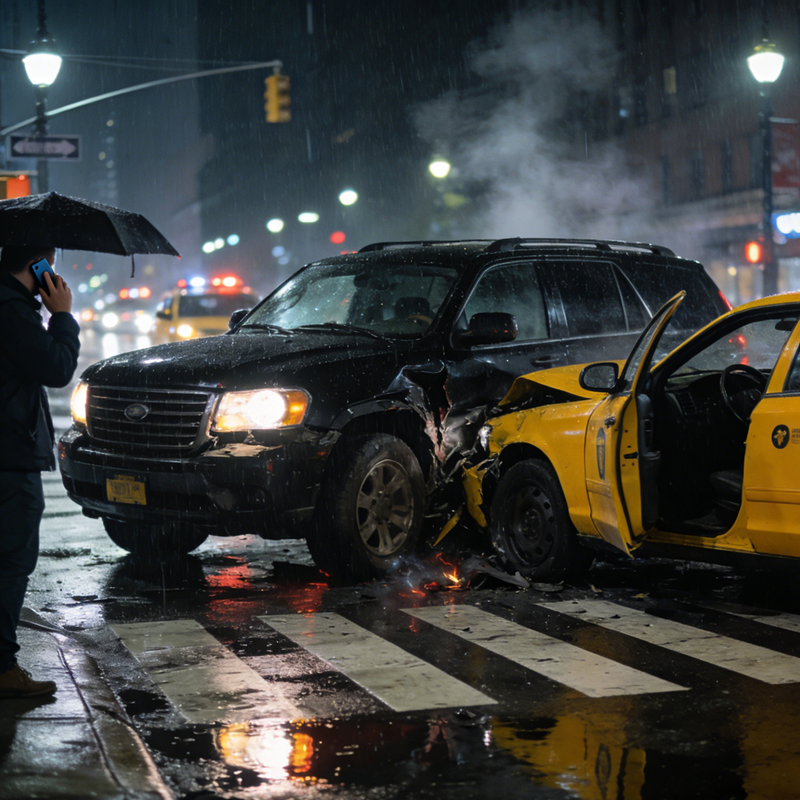
You will face bad weather. Every new driver must learn how to handle rain, snow, and fog. The number one tip? Slow down. Your tires have less grip on wet or icy roads.
In heavy rain, turn on your headlights. It helps you see and be seen. Avoid sudden movements. If you start to skid, stay calm. Look where you want to go. Steer gently in that direction. Do not slam the brakes.
Fog is tricky. Use your low-beam headlights. High beams will reflect back and blind you. Increase your following distance dramatically. Listen for traffic you cannot see.
Night driving is a major challenge for a new driver. Your visibility is limited. Make sure your windshield is clean, inside and out. Dirty glass causes glare from headlights. Dim your dashboard lights. It reduces eye strain. Look slightly to the right of oncoming headlights to avoid being dazzled. If a car behind you has bright lights, adjust your rear-view mirror to the “night” setting.
Other drivers can be rude. You may encounter road rage. The best thing a new driver can do is stay calm. Do not make eye contact. Do not gesture back. If someone is tailgating you, safely change lanes and let them pass. Your job is to get home safely, not to win an argument.
Chapter 5: Defensive Driving and Lifelong Safe Habits
Defensive driving is the highest level of safety. It means driving as if everyone else might make a mistake. You are always planning an escape route.
Predict what could happen. That car at the side street looks like it might pull out. Be ready to brake. That pedestrian looks distracted. Prepare to stop. This proactive thinking is what separates a good driver from a new driver who is just reacting.
Avoid all distractions. Put your phone in the glove box. Set your GPS before you move. If you need to adjust something, pull over. Eating, drinking, and fiddling with the radio are also distractions. A split-second is all it takes for an accident to happen.
Finally, take care of your car. A safe driver maintains their vehicle. Check your tire pressure monthly. Change your oil on schedule. Make sure your lights and brakes work. A well-maintained car responds better in an emergency.
The journey of a new driver is amazing. It is about freedom and responsibility. Embrace the learning process. Be patient with yourself. Every trip makes you better. Remember the tips in this guide. Practice them. Soon, driving will feel natural. You will navigate the road not as a nervous new driver, but as a confident, safe motorist. Welcome to the road. Drive safely.
Taking Safety a Step Further: Seeing the Unseeable
Speaking of night driving and bad weather, even the most cautious new driver faces a physical limit: human vision. Fog, heavy rain, or pitch darkness can hide dangers until it’s too late to react. This is where modern technology acts as a superpower for your safety.
Imagine a tool that lets you see through the dark, cut through fog, and spot a pedestrian, animal, or stopped car hundreds of feet before your headlights ever catch them. This isn’t science fiction; it’s the reality of thermal imaging technology, now available for everyday drivers.
For instance, devices like the Robofinity Car Thermal Night Vision Camera are changing the game. This isn’t a standard camera. It uses a thermal sensor to detect heat signatures, making living things and vehicles stand out clearly in total darkness, rain, snow, or fog. Its AI can intelligently identify and highlight people, cars, and animals right on your screen, giving you an early warning. It even provides a pre-collision alert if a potential hazard is detected.
The key benefits for a driver—especially someone still gaining experience—are huge. It extends your effective vision to over 200 meters in conditions where you might otherwise see only 30 or 40. It reduces the “what’s out there?” anxiety when driving at night. The installation is designed to be simple and quick, not requiring complex wiring. Ultimately, it’s a powerful aid that dramatically boosts your situational awareness. For any driver prioritizing safety, adding a layer of vision that works when your eyes can’t is a wise investment in peace of mind and protection on every journey.



Leave a comment
All comments are moderated before being published.
This site is protected by hCaptcha and the hCaptcha Privacy Policy and Terms of Service apply.